Root Smudge: What It Is, How It Works and Who It Suits

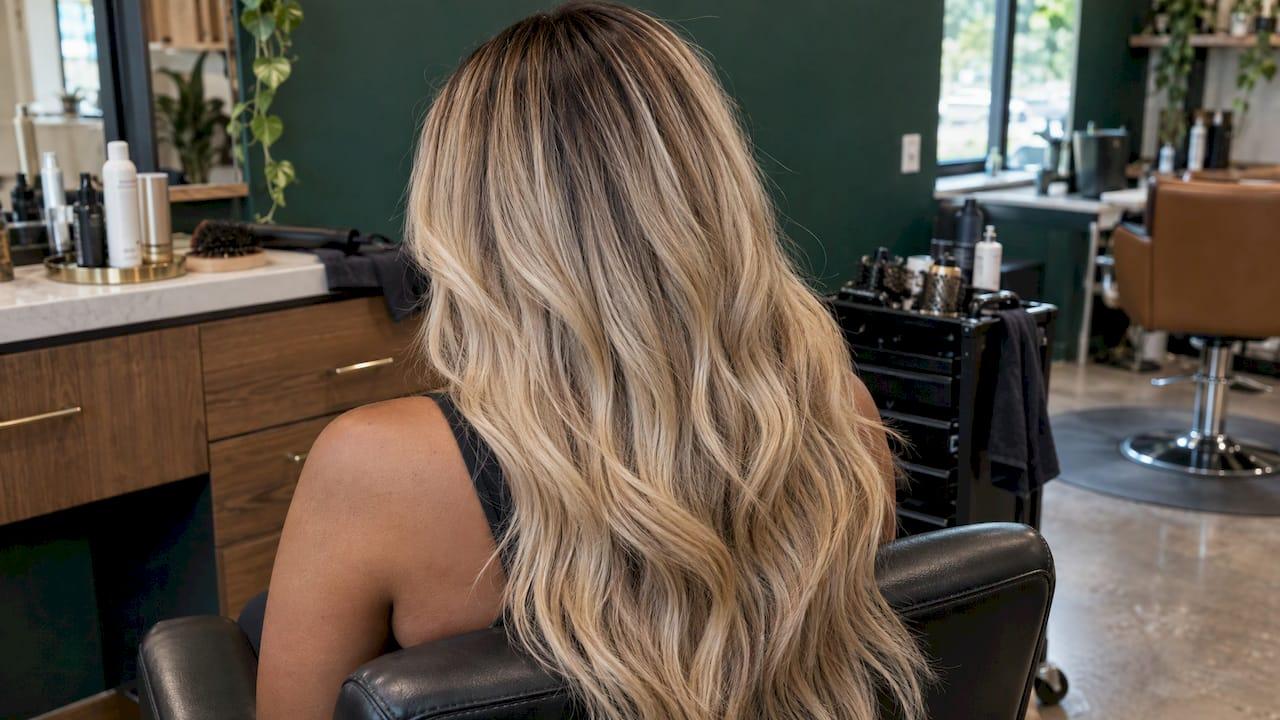
A root smudge is a soft, slightly deeper colour blended into the first inch or two of your hair at the scalp, so your highlights melt into your natural root instead of stopping at a hard line. It is a quick service that follows highlights or balayage, and its payoff is simple: your regrowth looks like part of the design, so you can wait longer between appointments. How well it works depends on the colourist’s formula, placement and blending, which is why it is worth booking with someone who colours for a living and does it with gentle, ammonia-free colour.
TL;DR
- A root smudge blends your natural root colour into blonde or highlighted hair, usually within a shade or two of your natural colour, so there is no harsh regrowth line.
- A shadow root is deeper and runs further down. A root melt blends further still, through the mid-lengths and sometimes to the ends.
- It is applied with demi-permanent colour, which deposits colour and fades rather than lifting your natural pigment.
- Expect to go roughly two to three months before a touch-up, depending on how much lighter your highlights are than your roots.
- At Head Case Hair Studio, our colour is ammonia-free, certified-organic NATULIQUE, booked as all-inclusive sessions.
Table of Contents
- What a root smudge actually does
- Root smudge vs shadow root vs root melt
- How a root smudge is applied
- Wet hair or dry hair?
- Who a root smudge suits
- How long a root smudge lasts
- Why the formula matters at the scalp
- Book a root smudge at Head Case
- Our view on root smudges
- FAQ
- Sources
What a root smudge actually does
When you go blonde or add highlights, the new colour starts a little away from the scalp. As your hair grows, the gap between your natural root and the lighter hair becomes visible. A root smudge fills that gap with a soft transition.
According to L’Oréal Paris, the hair is lightened but the roots stay slightly darker, within a shade or two of the natural colour. That gives a gradual move from dark roots to lighter mid-lengths and ends, with a grow-out that has no harsh lines.
Colorists often describe the goal as a lived-in look. Byrdie quotes colorist Joey LeBeija saying the main objective is a lived-in look that lasts longer than traditional highlights. He adds that placement is key, so you look as if you are always in good lighting.
There are two practical benefits:
- Softer grow-out. The new growth blends with the colour you already have.
- More depth. Highlights that begin right at the scalp can look flat or stripey. A little shadow at the root makes blonde look richer and more natural.
Root smudge vs shadow root vs root melt
These three names are used loosely, and different salons draw the lines in slightly different places. What they share is a deeper colour at the root, blended into lighter hair. What changes is how deep it goes and how much contrast you see.
| Root smudge | Shadow root | Root melt | |
|---|---|---|---|
| How far down | Closest to the scalp, about an inch or two | Further down, a more defined band | Through the mid-lengths, sometimes to the ends |
| Look | Soft, natural, lived-in | Deliberate, a subtle ombré effect | Seamless, a gradient of several tones |
| Contrast | Low | Higher | Low to medium, fully blended |
| Best for | Easy grow-out | Making highlights stand out | A fully blended, dimensional result |
Per L’Oréal Paris, a smudge keeps the darker hue close to the roots, while a shadow root extends it farther down for a more pronounced gradient. A melt blends colour from the roots through the mid-lengths and often to the ends.
Depth numbers vary by colorist. Byrdie quotes LeBeija describing a root shadow as dragged three to five inches down from the scalp, and a root tap as a delicate application around the hairline that preserves brightness. Wella Professional describes a root melt as typically two to three inches down from the root, using demi- or semi-permanent colour.

Root melt vs balayage
This comparison trips people up because the two are not alternatives. Balayage is the way the lighter colour is painted onto the mid-lengths and ends. A root melt or smudge is what happens at the root afterwards. Many of the softest, lowest-maintenance blondes combine both: balayage for the brightness, then a smudge or melt to blur the start of it. Byrdie reports that combining smudging, tapping and melting gives the most seamless, natural-looking colour.
How a root smudge is applied
You do not need to apply it yourself, but knowing the steps helps you judge a consultation and understand what your session includes. Colorists have their own variations. The outline below follows published professional guidance, and the points where it can go wrong are where an experienced colourist earns the appointment.

1. The base is lightened first
A smudge usually comes after highlights, balayage or a full head of colour, as John Frieda explains. The stylist applies a slightly deeper shade at the root and blends it into the mid-lengths. This creates a shadow at the roots while the rest of the hair stays bright.
Where it goes wrong: If the highlights themselves are patchy or start too close to the scalp, no smudge can fully hide it. The quality of the blonding underneath matters most.
2. The formula is chosen
Smudges are done with demi-permanent colour. The shade is usually within a shade or two of your natural colour, as L’Oréal notes. For a shadow applied over foil highlights, Wella’s professional guidance is a formula one to two levels darker than the highlights, kept out of the hairline for front brightness.
Where it goes wrong: A formula that is too dark leaves a visible band. One that is too light means the line is still there. Matching a root that is not one uniform colour, as many are, takes a trained eye.
3. Colour goes on at the root
Modern Salon reports colourist Avera’s method: working in half-inch sections on dry, detangled hair with demi-permanent colour. The colour drops about a quarter inch in the front and up to an inch in the back. Modern Salon says the application takes under a minute and processing is no longer than five minutes.
Placement is deliberately shallower around the face and deeper at the back. That keeps the brightest hair at the front, where it frames the face.
4. The line is blended away
The stylist feathers the colour downward so it fades into the lighter hair. Nothing should look like a stripe. Blending is the part that cannot be rushed, and it is the part that separates a smudge from simply colouring the roots.
5. Process, rinse and tone
Processing times are short. Colourists then rinse and often tone or gloss the lengths so the blonde and the root are balanced in tone. At Head Case, colour is booked as an all-inclusive session that covers the colour, the toning and a blowout. You choose the result you want rather than a list of line items.
Wet hair or dry hair?
People ask this a lot, and the honest answer is that colourists differ. Dry, detangled hair, as in the Modern Salon method above, gives precise placement and more coverage. Damp hair dilutes colour slightly, which tends to give a more translucent, blended finish. A good colourist picks based on how much contrast the grow-out needs, your hair’s porosity and how dark your natural root is compared with your lengths.
This is a judgement call made during your appointment, not something you need to decide beforehand. What you need to decide is the result: nearly invisible, or a defined shadow.
Who a root smudge suits
Blondes and highlighted hair. The smudge is made for you. John Frieda notes it pairs well with icy platinum, champagne and honey tones, making blonde look more natural and softening regrowth lines.
Balayage and lived-in blonde. If you are coming in from Keller, Southlake, Colleyville or Grapevine for balayage, ask for the smudge to be part of the plan. It extends the time between visits and keeps the colour looking soft as it grows out.
Brunettes with dimensional colour. A shadow or melt can make caramel or lighter ends look intentional against a dark root. Wella’s examples include chocolate roots with caramel ends for a sun-kissed look.
If you are growing out grey. This needs a different plan. Vogue reports that colourists generally do not recommend smudging for hair with heavy greys, because it can give a high-contrast grow-out. Grey blending is its own service, built around the grey you have. Book a colour session and tell your colourist you want to transition, and the plan can be explained to you before you commit.
How long a root smudge lasts
It is designed to be low-maintenance, so you can stretch your visits. L’Oréal Paris says a smudge generally lasts around two months before a touch-up, and going past that should not make regrowth too obvious. Modern Salon’s colorist suggests clients return every four to six weeks for a fresh smudge and glaze if they want it to stay at its most polished. In practice, your timing depends on how much lighter your highlights are than your natural colour. The bigger the contrast, the sooner you will notice it.
Because the colour is demi-permanent, it deposits colour and fades gradually instead of leaving a hard line. That is why a smudge can be refreshed in a short appointment rather than redoing all your highlights.
Keeping the colour looking good between visits
- Wash less often and use colour-safe products.
- Cut back on heat styling.
- Use a tinted gloss or a purple shampoo to keep blonde from turning brassy, as John Frieda suggests.
- Read our guide to toner for blonde hair for shades and upkeep.
- If your hair has been lightened a lot and feels dry, a smoothing treatment on bleached hair is worth reading about before you book anything.
Why the formula matters at the scalp
A root smudge puts colour right at the scalp, over and over. That is a good reason to care what is in it. Our studios use ammonia-free NATULIQUE certified-organic colour, and our products are vegan, cruelty-free and sustainably packaged. If that matters to you, our guide to vegan hair color explains what the label means and how to choose.
If you also like the texture a perm gives, NATULIQUE is the safer perm alternative in our studios, and our treatments and perms use the same philosophy of gentler chemistry.
Book a root smudge at Head Case
If you want blonde or balayage with a grow-out that looks good for months, start with an ammonia-free colour session. Sessions are all-inclusive: colour, toning and a blowout, so you choose the result you want. We are an eco-luxury studio in Keller, Texas, and a full salon and spa in downtown Kansas City, Missouri. Our Google reviews run to 935 at 4.8 in Keller and 261 at 5.0 in Kansas City. Our artists are educated colourists, and we recycle more than 95% of our waste as a Certified Green Business and Green Circle Salon.

If you are in Kansas City, you can see the full menu on our Kansas City page, including head spa and facials. A scalp treatment fits well alongside a colour day.
Our view on root smudges
Most people think of a root smudge as a finishing touch. We think of it as part of the colour plan from the start. When we design blonde or balayage, we are already thinking about what that hair looks like in eight weeks, not just on the day you leave.
That is where educated artists matter. Blending a smudge so there is no line takes patience, and choosing the right depth takes experience with your natural colour, your highlights and your face.
It is also why we colour the way we do. Putting colour at your scalp again and again is something we take seriously, which is why we use ammonia-free, certified-organic NATULIQUE and run a fully green studio. You should not have to choose between beautiful blonde and clean chemistry.
Tell us the result you want, whether that is invisible roots or a deliberate shadow, and we will build it from there.
Kelley Swing
FAQ
Is a root smudge the same as a shadow root?
Not quite. They are close cousins, and some salons use the terms interchangeably. A smudge sits closer to the scalp and aims to be nearly invisible, while a shadow root goes deeper for a more deliberate gradient. Tell your colourist how much contrast you want, and show a photo.
How often do I need a root smudge refreshed?
Around every two to three months for many people, depending on how light your highlights are against your natural root. Some colourists suggest four to six weeks for the freshest look. Your colourist can tell you what suits your hair when they see how it grows out.
Will a root smudge damage my hair?
It uses demi-permanent colour, which deposits colour rather than lifting your natural pigment, and processing is short. The lightening done for highlights is a separate step. If you have had a patch test reaction to colour before, tell your colourist and ask about a patch test first. Our colour is ammonia-free NATULIQUE.
Can I get a root smudge if I have grey hair?
Light greys can blend into a smudge, but heavy greys often grow out with high contrast, as Vogue’s reporting notes. Grey blending is usually the better route. Book a colour session and your colourist can explain the process before you commit.
Sources
- What Is a Root Smudge and How Is It Done? | L’Oréal Paris
- Root Smudging Gives You Lasting Color With Minimal Upkeep | Byrdie
- How Gwyneth Paltrow’s Colorist Transitions Her Grays | Vogue
- Creating the Perfect Smudge Root | Modern Salon
- Root Shadow vs Root Melt | Wella Professional
- Guide to Root Smudges, and the Root Melt Technique | John Frieda