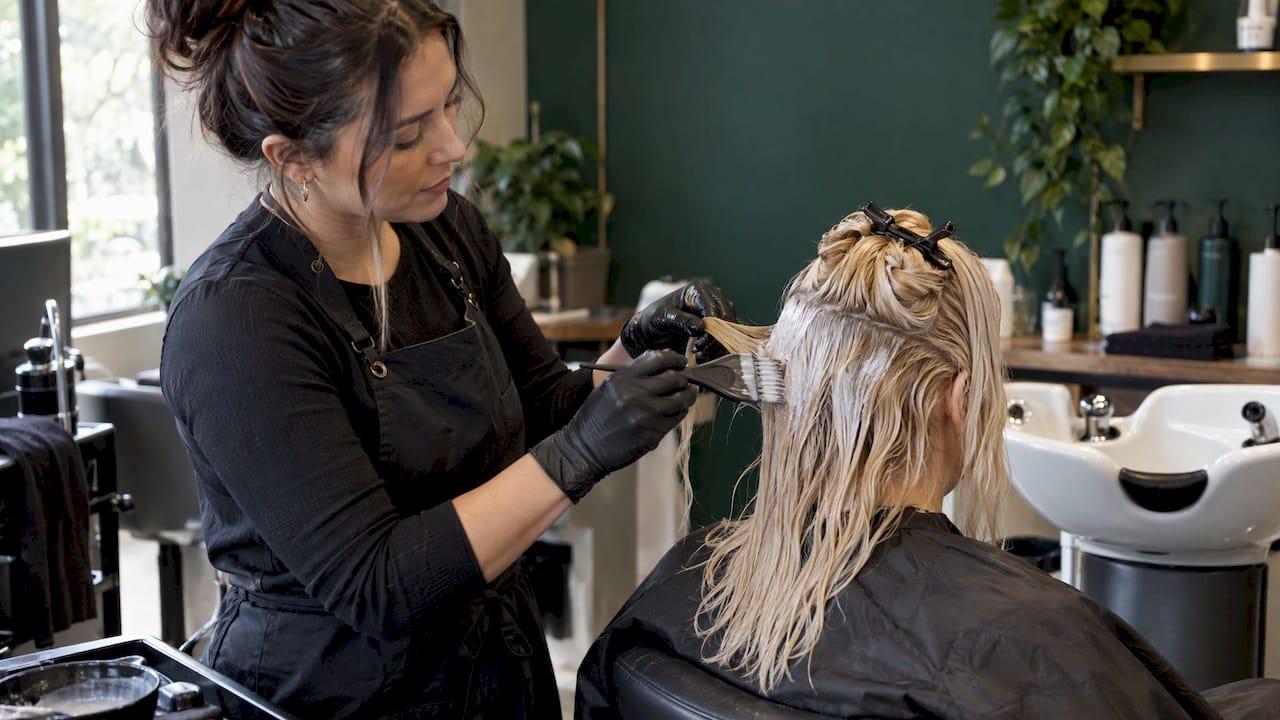
Toner for Blonde Hair: Shades, Brassiness and Upkeep

Toner for blonde hair is a sheer, pigment-depositing color that cancels unwanted warmth and sets the final shade after lightening. It does not lighten anything. The right toner depends on the warmth your blonde is hiding: violet for yellow, blue for orange. The cleanest result comes from a colorist who sees your hair in person, which is why every color session at Head Case Hair Studio includes toning, along with the color and a blowout.
TL;DR
- Toner deposits pigment on the hair’s surface to neutralize brassiness. It sets the shade but never lifts it.
- Violet cancels yellow. Blue cancels orange. Red or deep orange tones usually need more lightening before any toner can help.
- Toner works best on hair that is at the right level. Toning over hair that is too dark leaves orange showing.
- Expect a salon-style toner to last roughly three to eight weeks, depending on the formula, your hair and your routine.
- A colorist can read your underlying tone and mix a custom shade, so the toning step is built into our color sessions.
Table of Contents
- What toner actually does to blonde hair
- How to choose a toner shade for brassy blonde
- Toner, gloss and purple shampoo: how they differ
- How long toner lasts and how to extend it
- Toning at home: the safety points that matter
- When a colorist should tone your blonde
- What a toning appointment looks like with us
- Our perspective on toning clean
- Book your blonde with a colorist
- Frequently asked questions
- Sources
What toner actually does to blonde hair
Bleach and high-lift color remove your natural pigment, but they rarely remove all of it. What remains is warm: yellow, gold, orange or even a hint of red. Toner is the finishing step that deals with it.
A toner is a color-depositing product applied to lightened hair. It neutralizes warmth and shifts the overall shade toward your target without lightening the hair further. Think of it as the last coat that decides whether your blonde reads buttery, beige, pearl or icy.
The logic comes from the color wheel. As American Salon explains, pre-lightened hair that looks yellow is missing blue and red, so a violet shade supplies both and the result looks balanced and natural. Violet sits opposite yellow, which is why it cancels it.
Why toner looks different from permanent color
Permanent color works inside the hair. Toner mostly sits on the surface, so it is a gentler step, and it can make hair look smoother and shinier because the surface reflects light more evenly. That surface position is also the reason toner fades. Washing, heat and sun gradually lift it off, and the warmth underneath returns. That return is what most people call brassiness.
How to choose a toner shade for brassy blonde
The question “which toner for blonde hair” has one honest answer: it depends on the color of the warmth you want to cancel. Look at your hair in daylight and name what you see.
| What you see | What cancels it | Typical result |
|---|---|---|
| Pale yellow, straw | Violet | Cool, icy or platinum blonde |
| Yellow-orange | Violet-blue | Softer, neutral blonde |
| Orange, copper | Blue-based | Beige or ash blonde |
| Red or warm brown | More lightening first | Toner alone will not fix it |
This matches the guidance that pale yellow suits violet, orange or copper suits a blue-based toner, and red or warm brown generally needs more lightening, since toner does not lighten. Ash tones also cool unwanted red hints.
One trap catches many people. Violet alone over an orange base can make the orange pop and look muddy. A colorist quoted by Byrdie notes that when hair looks more orange than yellow, a blue and purple formula is the better match. Misreading your own tone is the most common reason a toner turns out wrong.
Reading a blonde toner chart
Professional charts pair two ideas: how light a shade is, and which tone it carries. Lighter blondes sit in the higher levels, and each shade is named for its direction, such as ash, violet, beige or gold. Reading a chart is easy. Matching it to your hair is the hard part, because your hair is rarely one color from root to tip.
Level matters as much as shade
A chart cannot tell you what is underneath your blonde. Underlying pigment changes with lift level. The OpenTextBC hair color text shows that toning hair that is not correctly leveled can cancel yellow but leave orange more obvious. That is why toning on-level, or slightly darker, gives the most balanced result.
In practice, one head of hair often has three conditions at once: a darker root area, a mid-length that was lifted last time, and ends that have been lightened many times. Each takes pigment differently. This is the strongest argument for having toner mixed and placed by someone who can see all three.

Toner, gloss and purple shampoo: how they differ
These products get lumped together, but they do different jobs.
- Salon toner or gloss. Applied at the shampoo bowl after lightening, mixed for your exact tone. This is the step that sets your blonde.
- Toning shampoo or mask. Purple or blue pigments you use at home between visits to hold the shade.
- Box toners and drops. Convenient, but their pigment strength is unpredictable on hair they were not mixed for.
Women’s Health quotes a hairstylist who says gloss toners typically last four to six weeks and semi-permanent toners six to eight. The same piece notes that at-home products can carry too much or too little pigment, which makes results hard to predict.
How long toner lasts and how to extend it
Plan on a refresh every four to eight weeks. Where you land in that range depends on how porous your hair is, how often you wash it, how much heat you use and whether you spend time in the sun or in a pool. Ends fade first because they are the most porous, which is why they often look yellow while your roots still look cool.
Habits that keep a toned blonde looking fresh:
- Wash less often and use lukewarm water. Hot water opens the cuticle and speeds fading.
- Choose color-safe, sulfate-free shampoo. Harsh cleansers strip surface pigment.
- Use a purple or blue shampoo once or twice a week. Byrdie’s colorist roundup advises leaving it on for a few minutes and avoiding overuse, since too much leaves a purple tint. Use blue-leaning formulas if your blonde runs warm.
- Protect from heat. Apply a heat protectant before blow-drying or using hot tools.
- Protect from sun. The American Academy of Dermatology recommends a wide-brimmed hat to protect hair, especially if you dye, bleach or perm.
- Condition weekly. Well-conditioned hair holds on to pigment more evenly.
Build-up is the quiet risk of constant touch-ups. Pigment layers on top of pigment, and the blonde gets darker and duller. A scheduled refresh with a professional resets the shade instead of stacking it.
Toning at home: the safety points that matter
If you do use a store-bought color product between visits, the safety steps are not optional. The American Academy of Dermatology advises testing a store-bought hair color before use and following the manufacturer’s instructions. Stop and do not dye your hair if you develop a rash, redness, swelling, burning or itching, as these signal an allergic reaction. See a dermatologist or your doctor if a reaction persists.
Consumer Reports quotes a dermatologist who recommends a 48-hour patch test on a small area of skin before applying dye across the scalp. The same article suggests a thick layer of petroleum jelly along the hairline to protect facial skin. People with sensitive scalps, a history of reactions to hair dye or a scalp condition should talk to their dermatologist before coloring.
A second practical point is timing. Good Housekeeping reports a colorist’s advice to wait two weeks after bleaching before toning at home, and to apply toner only to the brassiest areas so they match the rest. Deciding which areas are brassiest is exactly the judgment a colorist makes every day.

When a colorist should tone your blonde
Book the toning with a professional in these situations:
- You are lightening for the first time or going significantly lighter.
- Your hair looks orange or patchy, not just yellow, so one violet product will not fix it.
- You have highlights, balayage or a grown-out root with several tones in one head.
- You want a specific shade, such as pearl, champagne, sand or icy platinum.
- Product build-up has made your blonde look flat or muddy.
A colorist quoted by Byrdie explains that the professional has to see the predominant tone to cancel, using a violet-based gloss for yellow, violet-blue for yellow-orange and blue-based for orange. The same colorist warns that at-home glazes and glosses can build up over time and make future highlighting harder. Women’s Health quotes a stylist who recommends doing major color processes in the salon, with a professional guiding maintenance.
What a toning appointment looks like with us
At Head Case Hair Studio, color is booked as an all-inclusive session. The session covers the color, the toning and a blowout, so you choose the result you want rather than piecing together line items. Toning is part of the process, not an add-on to remember to ask for.
Our color is ammonia-free NATULIQUE certified-organic color, applied by artists who are educated in color and lightening. That matters for blondes, because lightening and toning are done together: your colorist reads the underlying tone, decides what the toner needs to cancel and finishes the shade you came in for. If you want to see how our guests feel about the results, our Keller studio has 935 Google reviews at 4.8, and our Kansas City studio has 261 at 5.0.
Bring photos of the blonde you love and photos of what you are trying to leave behind. Both help a colorist hear what “too yellow” or “too ashy” means to you.
Our perspective on toning clean
Blonde is the most technical color we do, and toning is where it is won or lost. A lightener does the heavy lifting, but the toner is what makes the color look expensive and intentional. That is why we never treat it as an afterthought.
We built Head Case around the idea that you should not have to choose between high-end results and clean chemistry. We use ammonia-free NATULIQUE certified-organic color, along with vegan, cruelty-free, sustainably packaged products, and we are a Certified Green Business and a Green Circle Salon. For the same reason, we point guests who want a perm toward NATULIQUE, which we consider the safer perm alternative.
Our colorists are artists first. They look at your underlying tone, your level, your porosity and your lifestyle, then mix a toner for your hair alone. Our all-inclusive color sessions mean you are never guessing whether toning is included. It is part of the session, with the blowout that shows you the finished shade.
If your blonde has been drifting yellow or orange, you do not need a drawer full of products. You need a plan: the right shade, a refresh schedule that fits your hair and a simple home routine to hold it in between.
Kelley Swing
Book your blonde with a colorist
If you want a blonde that stays cool, soft and balanced, our ammonia-free color sessions and highlights include the toning step and a blowout. Your colorist reads your tone, picks the shade and tells you when to come back for a refresh.

We have two studios. You can find our Keller, TX studio in the Dallas-Fort Worth area, or our full salon and spa in downtown Kansas City. If you are planning a wedding, our bridal hair and makeup team can plan your blonde ahead of the day so the tone is fresh for photos.
Pairing toning with a scalp reset
Healthy hair holds tone better. At our Kansas City studio, a head spa treatment is a good companion to a color visit, since a comfortable, well-cared-for scalp is the base for every shade.
Frequently asked questions
What do toners do for blonde hair?
Toners deposit sheer pigment on lightened hair to cancel unwanted warmth like yellow or orange and to set the final shade. They do not lighten the hair. Violet cancels yellow and blue cancels orange, so the right toner depends on your underlying tone.
What toner takes yellow out of blonde hair?
A violet-based toner neutralizes yellow because violet sits opposite yellow on the color wheel. If your hair is closer to orange than yellow, a blue-based formula is usually the better match, since violet alone can make orange stand out. A colorist can tell which one you need in a single look.
How often should I tone my blonde hair?
Most people refresh their toner every four to eight weeks. Gloss-style toners tend to sit at the shorter end of that range and semi-permanent toners at the longer end. Washing frequency, heat styling and sun exposure all change the timing, so your colorist can set a schedule for your hair.
Does toner damage hair?
Toner mostly deposits color on the hair’s surface rather than working deep inside it, so it is a gentler step than permanent color. L’Oréal Paris notes that toner won’t damage your hair and can make it look healthier. Using a color-safe shampoo and heat protectant helps the result last.
Can I use purple shampoo instead of a toner?
Purple shampoo is a maintenance tool that helps hold a toned shade between visits, usually once or twice a week. It deposits far less pigment than a salon toner, so it keeps a blonde fresh rather than resetting it. Your colorist can recommend how often to use it for your tone.
Sources
- Say Goodbye to Brass by Mastering Toners, American Salon
- Hair Toner After Bleaching: Products and Tips, Ulta Beauty
- 4.6 Formulating the Toner, Hair Colour for Hairstylists, OpenTextBC
- How to Tone Down Blonde Hair, According to Colorists, Byrdie
- Everything You Need To Know About Hair Toners, Women’s Health
- Coloring and perming tips for healthier-looking hair, American Academy of Dermatology
- Some Boxed Hair Dyes Contain Fewer Toxins Than Others, Consumer Reports
- 14 Best Toners for Blonde Hair, Good Housekeeping
- What is Hair Toner and What Does It Do? L’Oréal Paris