Balayage for Brunettes: Shades, Process and Upkeep

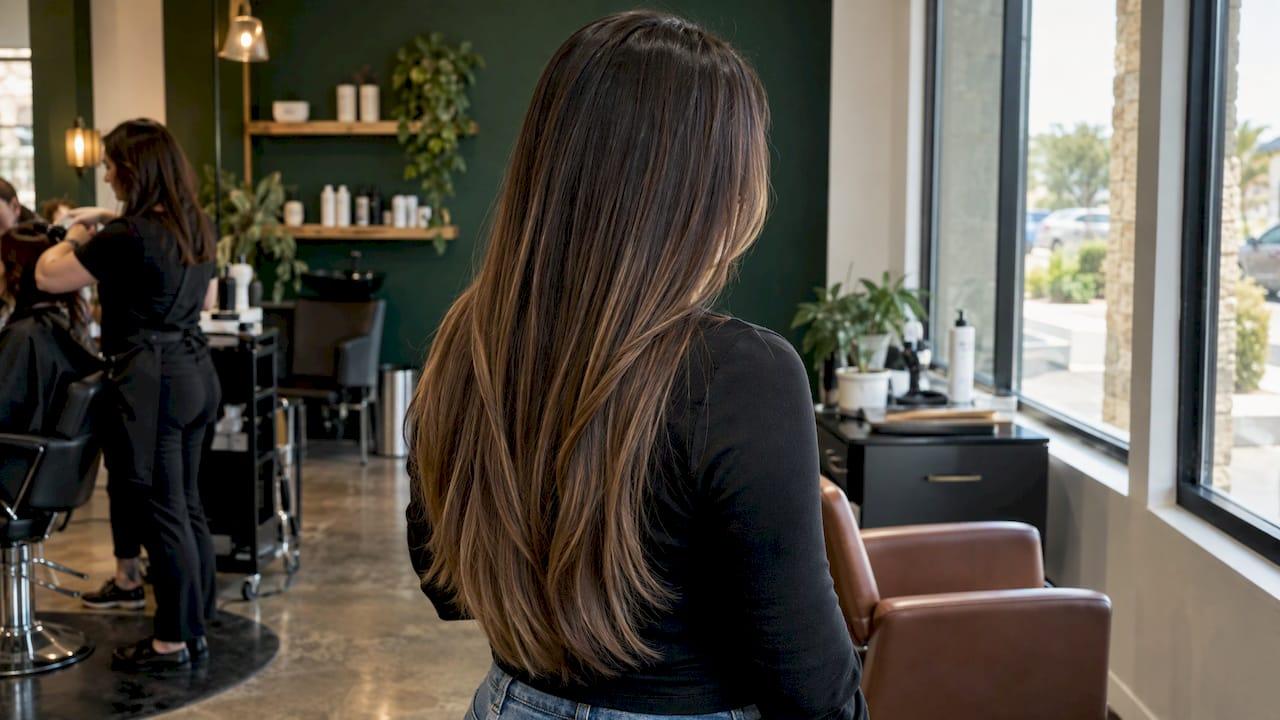
Balayage suits brunettes very well. A dark base gives lighter, hand-painted pieces more contrast, so the result looks dimensional without looking “done.” The look that grows out best is a soft, multi-tonal blend one to two levels lighter than your natural color, concentrated toward the ends. At Head Case Hair Studio in Keller, Texas, and downtown Kansas City, we paint it with ammonia-free, certified-organic NATULIQUE color, booked as an all-inclusive session that covers color, toning and a blowout. Below you’ll find the shades, the process for dark, wavy and curly hair, and what upkeep really involves.
TL;DR
- Balayage is painted freehand on selected strands, so roots stay natural and the grow-out is soft. Glamour recommends going one to two levels lighter than your base.
- Warm caramel, honey, chestnut and copper read naturally on brunettes, and cooler beige or mocha tones suit cooler complexions.
- Very dark hair may need more than one visit to reach a much lighter result, so plan the journey with your colorist before you start.
- Curly and wavy hair take balayage beautifully when the colorist assesses texture and strength first, and you keep up a weekly moisture routine.
- Warm tones close to your base need the least maintenance. High-contrast looks need the most.
Table of Contents
- Why balayage works so well on brown hair
- Brunette balayage shades to bring to your appointment
- Balayage on dark hair: what to plan for
- Balayage on wavy and curly hair
- How to choose your shade and placement
- Low-maintenance brunette balayage
- Upkeep: toning, shampoo and timing
- A note on perms and gentler chemistry
- Book balayage at Head Case
- FAQ
- Sources
Why balayage works so well on brown hair
Balayage comes from a French word meaning “to sweep.” Instead of saturating hair from root to tip, the colorist paints lightener or color by hand onto the surface of chosen sections. According to Glamour, balayage on brown hair can be just as transformative as on blonde hair, and the brunette base makes the lighter pieces especially impactful because of the contrast between levels.
Three things make it a strong choice for brunettes:
- No hard regrowth line. Roots stay untouched, so as your hair grows you don’t see a stripe at the part.
- Dimension without a dramatic change. A few lighter pieces add movement and make hair look fuller, which is why it suits people who don’t want a radical shift.
- Control over contrast. You can stay a shade or two off your natural color or go much lighter, and the placement decides how natural it looks.
The trend is also moving your way. Christel Barron-Hough, founder of Stil Salon, told Glamour that balayage fits the “quiet luxury” hair movement, where healthy-looking, understated color wins over anything obviously done. She notes that most clients now ask for a natural, non-chunky result, which is why brunettes have so many shades to choose from, from chestnut and copper to caramel, honey and cool beige.
Brunette balayage shades to bring to your appointment
The right shade depends on your base level (how light or dark your natural hair is), your skin’s undertone and how visible you want the color to be. These are the families colorists most often work with, drawn from stylist commentary in InStyle and Byrdie.
| Look | What it is | Best for | Contrast |
|---|---|---|---|
| Soft brown balayage | Lighter brown and honey pieces toward the ends | Dark brunettes who want subtle dimension | Low |
| Warm caramel or honey | Golden pieces over a dark brown base | Warm or olive complexions, lighter eyes | Low to medium |
| Copper | Dark brown melting into rich copper | Dark brunettes who want warmth that still looks natural | Medium |
| Mahogany | Subtle red-brown painted from dark roots down mid-lengths and ends | Cool-toned brunettes, a richer espresso look | Low |
| Bronde | Foil-and-balayage blend with a brightened face frame and a natural root | Brunettes heading toward blonde without losing depth | Medium to high |
| Ash or mushroom | Cool, smoky beige tones | Cooler complexions | Medium to high |
A few details from colorists are worth knowing before you pick:
- Copper reads more natural on darker brunettes. InStyle quotes stylist Jerome Lordet on this, citing Jasmine Tookes’ espresso roots with copper face-framing pieces.
- A few lighter pieces at the ends are enough. Another colorist quoted by InStyle recommends light brown and honey pieces mainly toward the ends for dimension on very dark hair.
- Bronde is built in layers. InStyle describes Tate McRae’s look as a classic foil, a concentrated face frame and balayage on the rest, keeping the root natural while lightening nearly all ends.
- Honey around the face brightens skin. Byrdie shows Ciara’s honey highlights with a face frame on a dark brown base as an example.
Bring two or three photos, and pick ones with hair close to your natural color. Photos of much lighter hair on a different base can give you the wrong picture of what is possible in one visit.
Balayage on dark hair: what to plan for
People with very dark brown or black hair ask whether balayage damages it, and the honest answer is that lightening dark hair is a bigger job than lightening light brown hair. That is a planning point rather than a reason to avoid it.
Open-air or foil-assisted?
Open-air balayage is painted on without wrapping. On very dark hair, New York colorist Rachel Bodt explained to Allure that open-air application can leave results understated, because it only touches one side of the hair and loses heat. A hybrid sometimes called foilyage lets the color reach the full surface, giving a soft, lived-in look. The same piece advises a bond-building or conditioning treatment alongside heavier lightening.

The takeaway: if you have very dark hair and want a visible change, tell your colorist so they can choose the application that matches your goal.
One visit or several?
Matrix Artistic Director Michelle O’Connor told The Tease that going to blonde from a dark level may take two to three visits to get there in a healthy way. A caramel or chestnut result on a dark base is usually achievable sooner. A pale ash or icy tone is the long game.
A good rule from Revlon Professional’s balayage guide is that for natural levels 6 and darker, colorists should go no more than three levels lighter at a time to keep the blend soft.

How we approach it
At Head Case, color is done with NATULIQUE, an ammonia-free, certified-organic color line, and our color sessions are all-inclusive: color, toning and a blowout in one booking, so you decide the result you want rather than adding line items. For dark hair, the consultation is where we map how many sessions your goal realistically takes. You can read more about ammonia-free color sessions and highlights and what “vegan” means in a color line in our guide to vegan hair color.
Balayage on wavy and curly hair
Curls and waves show balayage differently from straight hair. Color painted onto individual curl clumps highlights the pattern, which is why this technique is a favorite for texture. Sally Beauty’s guide notes that the freehand, foil-free method works on all hair types and gives gentler results than traditional highlights.
For curly hair in particular, the preparation matters most:
- Assess texture and strength first. O’Connor stresses that curly hair tends to be more fragile than straight hair, and that misjudging texture (fine, medium or coarse) leads to the wrong developer strength.
- Strengthen before you color. She recommends protein or strengthening treatments before the color service and a clarified, clean scalp and hair on the day.
- Don’t stack chemical services on the same strands. A relaxer after balayage can compromise the hair.
- Expect longer between retouches. Curly hair takes longer to show regrowth, so a retouch every three to four months is typical, according to The Tease.
Wavy hair is the easiest in-between: it shows dimension without needing the full curl-by-curl placement, and the soft grow-out works in its favor. Pieces around the face and through the mid-lengths give waves a sun-touched look.
If your curls usually get cut like straight hair, ask for a cut and color plan together. Our curly hair specialists cut for your curl pattern, and shape matters as much as color for how balayage looks on curls.
How to choose your shade and placement
- Know your base level. Your colorist will read your natural level and any previous color. Box dye or old permanent color can lift differently from virgin hair.
- Stay one to two levels lighter for a natural look. Glamour’s advice is a shade one to two tones above your backdrop, concentrated toward the ends.
- Match warmth to your complexion. Honey and caramel flatter warmer undertones. Cooler beige and ash work with cooler ones.
- Decide how visible you want it. Subtle means a few lighter pieces at the ends. Medium means a brighter face frame and mid-lengths. High means bronde and beyond.
- Choose a face frame. Brighter pieces around the face are the quickest way to lift the complexion without lightening everything.
- Ask about upkeep before you book. Some looks need toning every few weeks, others almost nothing.
Low-maintenance brunette balayage
The low-maintenance promise is real, but it depends on the shade you choose. Haircutster’s comparison of dark brown balayage looks makes the pattern clear: warm tones close to your base (caramel, honey, toffee) need the least upkeep, cool tones close to the base need low upkeep plus toning, and high-contrast lifts such as espresso-to-blonde need the most.
For a look you can leave for months:
- Keep the color within one to two levels of your natural base.
- Choose warm tones that fade gracefully.
- Ask for a soft root blend so there is no visible line as it grows.
- Book a tone-and-blowout refresh when the shine fades rather than a full color service.
Upkeep: toning, shampoo and timing
Glamour reports that balayage can last up to six months, with a toner refresh about every four weeks. Brown hair that has been lightened tends to pull warm or brassy, which is why toning matters. Our guide to toner for blonde hair explains shades, brassiness and how often toning is needed, and the same logic applies to lightened brunette pieces.
Between visits:
- Use a color-safe, hydrating shampoo and conditioner. Hydration keeps lightened ends shiny.
- Tone at home only as needed. Glamour mentions at-home toning masks such as Wella Color Fresh Masks for brassiness.
- Add a weekly treatment if your hair is curly. O’Connor advises making it a habit for moisture and strength.
- Support the scalp and strands with gentle products. Natural haircare products made without harsh chemicals fit well into an aftercare routine.
In Kansas City, a head spa treatment is another way to look after the scalp between color appointments.
A note on perms and gentler chemistry
Balayage is one chemical service, and if you also want curl or body, the products matter. NATULIQUE is the safer perm alternative, and we use it for our treatments and perms as well as color. If you are planning both, mention it at your consultation so the services can be sequenced rather than stacked on the same strands.
Our point of view
We don’t think a beautiful brunette should have to choose between great color and clean chemistry. Balayage is the technique where an educated artist matters most, because the result comes from placement, not from a formula in a bottle. That is why we pair hand-painted color with ammonia-free, certified-organic NATULIQUE color, vegan and cruelty-free products, and a studio that recycles more than 95% of its waste.
When a guest sits down, we start with her natural level, her skin tone and the life her hair lives: how often she’ll come in, whether she wears it curly or straight, how much upkeep she wants. Then we build the plan, and for very dark hair that plan often has more than one step. Our color sessions are all-inclusive, so the price conversation is about the result you want, not a list of add-ons.
The best brunette balayage looks like your hair on its best day.
Kelley Swing
Book balayage at Head Case
Head Case Hair Studio is an eco-luxury salon in Keller, Texas, and a full salon and spa in downtown Kansas City, Missouri. Our color is ammonia-free and certified organic, we are a Certified Green Business (Green America) and a Green Circle Salon, and our guests have left 935 Google reviews at 4.8 in Keller and 261 at 5.0 in Kansas City. To plan your brunette balayage, start with ammonia-free color sessions and highlights or see the Kansas City studio.

Your session includes color, toning and a blowout, so you leave with the finished look.
FAQ
Is balayage good for brunettes?
Yes. Glamour notes that balayage on brown hair can be as transformative as on blonde, because the dark base makes lighter pieces stand out. Hand-painting also leaves the roots natural, so the grow-out is soft.
What balayage looks best on brown hair?
Warm caramel, honey, chestnut and copper are the most natural on brown hair, and cooler beige or mocha tones suit cooler complexions. Choose a shade one to two levels lighter than your base for a sun-lightened effect.
Can you do balayage on very dark hair?
Yes, though a big jump in lightness may take two to three visits to keep the hair healthy, according to Matrix Artistic Director Michelle O’Connor. A conditioning or strengthening treatment alongside the service helps. Your colorist will set the plan at the consultation.
How often do I need to retouch brunette balayage?
A toner refresh about every four weeks keeps tone fresh, and the technique itself can last up to six months, per Glamour. Curly hair shows regrowth more slowly, so retouches typically come every three to four months.
Does balayage work on curly and wavy hair?
Yes. Painting color onto curl clumps highlights the pattern. Have your colorist assess texture and strength first, and keep up a weekly moisture treatment afterward.
Sources
- Glamour: Balayage on Brown Hair
- InStyle: 28 Brown Balayage Looks
- Byrdie: Brunette Balayage Ideas
- Allure: Foilyage Balayage Hair Color
- The Tease: Michelle O’Connor’s Balayage Tips for Curly and Textured Hair
- Revlon Professional: The Ultimate Guide to Balayage