Does Waxing Reduce Hair Growth? What the Evidence Says

Sometimes, but not reliably, and not permanently. Waxing pulls hair out at the root, so regrowth can look slower, softer and finer. Dermatology sources say repeated waxing may weaken follicles enough to reduce growth over time, but the long-term effect is not established. It does not make hair grow back thicker, darker or faster, and it is not a substitute for laser or electrolysis if permanent reduction is your goal.
Below, we separate what waxing really does from what the internet promises, explain how long results last, and cover who should skip a wax appointment. We also explain what to tell your waxing professional before you book.
TL;DR
- Waxing removes hair from the root, so regrowth takes longer to show than after shaving. That is not the same as the follicle stopping.
- Some people notice sparser, finer hair after repeated waxing. Medical sources call this possible, not predictable, and give no dependable number of sessions.
- Waxing does not make hair grow back thicker or darker. Shaved hair only feels coarser because of its blunt tip.
- Expect smooth skin for roughly two to four weeks, depending on your body area and hair cycle.
- Skip or postpone waxing if you use isotretinoin, tretinoin or certain antibiotics, or if your skin is sunburned, irritated or broken.
Table of Contents
- What waxing does to the hair and the follicle
- Why regrowth can feel finer and softer
- Does waxing make hair grow back thicker or darker?
- How long waxing lasts, and what changes with regular appointments
- Waxing compared with the other options
- Before you book: who should not wax
- Aftercare that protects your skin
- Our view on waxing and hair growth
- Book a wax at our Kansas City studio
- FAQ
- Sources
What waxing does to the hair and the follicle
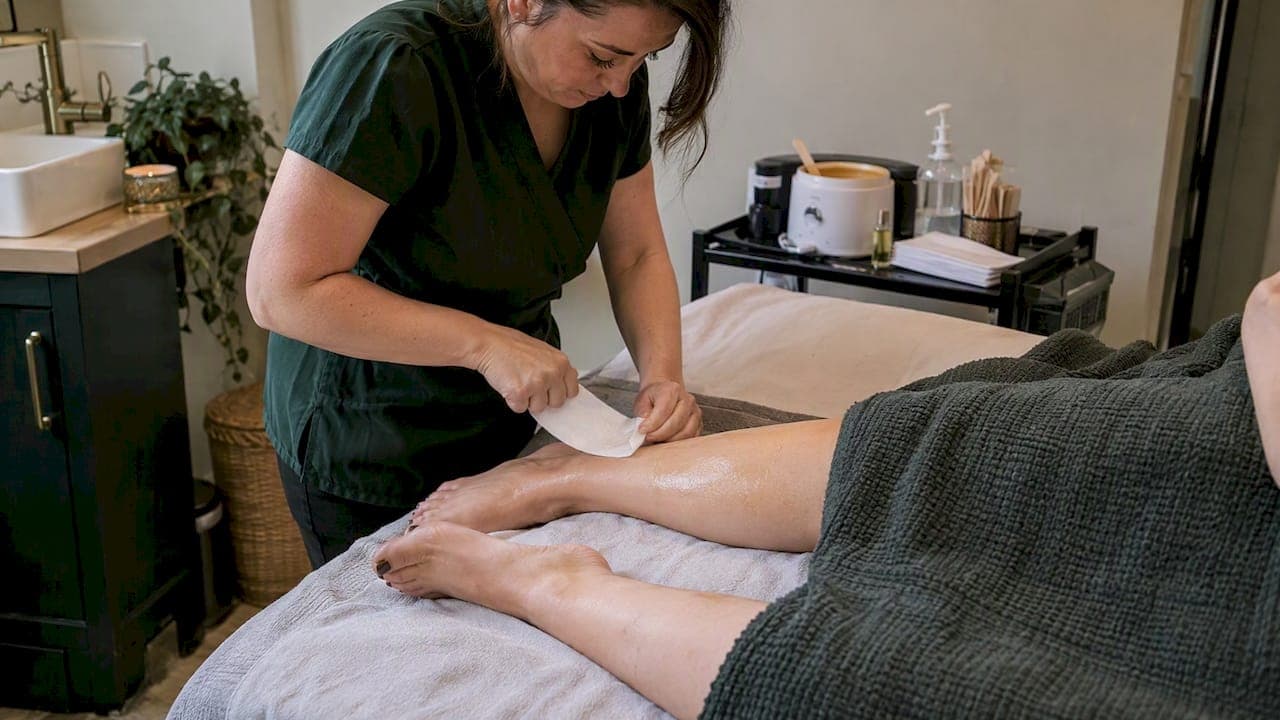
Wax, hot or cold, grips the hair and pulls it out in the opposite direction of growth. The whole shaft comes out, including the part below the skin surface. The Canadian Dermatology Association notes that this slows regrowth, with new hair typically appearing after two to three weeks.
Compare that with shaving, which cuts hair at the skin’s surface. The hair is already there, just shorter, so stubble shows up within a day or two.
The key point is the difference between two things that sound alike:
- Slower-looking regrowth. The hair has to grow back up from below the skin before you can see it. This is well explained and happens to nearly everyone.
- Reduced growth. Fewer or finer hairs over time. This is the part with uncertain evidence.
DermNet states that waxing does not reliably destroy the follicle and that the long-term effect of repeated waxing is unknown. Repeated trauma to the follicle might diminish growth, but permanent reduction is only a possibility.
Why regrowth can feel finer and softer
Many people who wax regularly report that their hair looks lighter and less dense. A few things can explain it, and not all of them involve the follicle at all.
The tapered tip
Natural hair has a fine, tapered end. Shaving leaves a flat, blunt cut end that can feel prickly and look darker. Experts on the BBC’s Trust Me, I’m a Doctor explain that after waxing, regrowth takes longer to become visible and the new hair arrives with that soft tip. So the apparent improvement is partly about how hair feels and looks, not proof that the follicle is making less hair.
The hair growth cycle
Hair grows in three stages: growth, transition and rest. Waxing works best on hair in the growth phase. According to Vogue’s reporting on the hair cycle, hairs that were resting or not yet through the skin during one appointment show up later, which is why you may see a patchy return at first. With consistent appointments, more of your hairs fall into the same rhythm, and regrowth can look more even.

Possible follicle weakening
Cleveland Clinic lists thinner regrowth as a possible benefit of waxing compared with shaving, and the Canadian Dermatology Association and DermNet both describe repeated follicle damage as something that may eventually diminish growth. None of these sources gives a reliable percentage, number of sessions or timeframe. If you hear a salon promise that after a set number of waxes your hair will be gone, treat it as marketing, not medicine.
Does waxing make hair grow back thicker or darker?
No. This is one of the most persistent beauty myths, and dermatologists consistently reject it. Experts cited by Scientific American say there is no science behind hair growing back thicker after shaving or waxing, and that the myth survives partly because people are poor observers of their own skin. The same article points to the way hair looks as it emerges: a blunt, short stubble looks darker against the skin than a long, fine hair.
If you do see a change in thickness after waxing, a few ordinary causes are more likely than the wax itself:
- Hormonal changes, such as puberty, pregnancy, perimenopause or certain medications, can change hair texture and density on their own.
- Hairs that were not previously visible may emerge, making the area look busier.
- Sun exposure lightens or darkens the skin around the hair, changing contrast.
If hair growth changes suddenly or dramatically, especially on the face, chin or chest, mention it to your doctor. That pattern can be linked to hormonal conditions that are worth checking.
How long waxing lasts, and what changes with regular appointments
This is the question that most people actually have in mind when they ask about reduced growth. The honest answer is a range.
| Source | Typical smooth period |
|---|---|
| DermNet | About 2 to 3 weeks before regrowth |
| Cleveland Clinic (Brazilian wax guidance) | Roughly 3 to 4 weeks hair-free |
| American Academy of Dermatology | A few weeks or longer |
| Healthline | New growth around 3 to 4 weeks, results up to 6 weeks |
The spread is real. Your result depends on:
- Body area. Hair on the underarms, legs, bikini area and upper lip grows at different speeds.
- Your personal growth cycle. Hormones, age, genetics and medications all play a part.
- Consistency. Booking on a steady schedule lets you catch more hairs in the same phase.
- Skin care between visits. Gentle exfoliation helps hair reach the surface instead of getting trapped.
In practice, a reasonable plan is to book your next appointment when hair is just long enough to grip, rather than waiting until it is long and unruly or going back too early.
Waxing compared with the other options
If you are asking about reduced growth, you are probably weighing whether waxing is the right method at all. Here is how the main choices differ in plain terms.
- Shaving: fastest and cheapest, but hair returns within a day or two and has a blunt tip. It does not change the follicle.
- Waxing: removes hair from the root, gives weeks of smoothness, and may lead to finer regrowth for some people. It is temporary.
- Laser hair removal or electrolysis: aimed at longer-term reduction, and offered by medical or licensed providers. If permanent reduction is your main goal, the American Academy of Dermatology and DermNet both treat waxing as a temporary method, so these options are the ones to ask a dermatologist about.
There is no shame in choosing waxing for what it does well: a clean, smooth finish that lasts, with hair that grows back softer than stubble. Just choose it for those reasons rather than counting on it to stop growth.
Before you book: who should not wax
Professional waxing is common and generally safe for healthy skin, but it pulls on the skin as well as the hair. The American Academy of Dermatology advises against waxing if you are taking isotretinoin or an antibiotic, or using tretinoin on the area, because skin can tear or become irritated. The same applies when skin is sunburned, broken or already inflamed.
Tell your waxing professional about:
- Any retinoid, whether prescription (tretinoin, isotretinoin) or over-the-counter products with retinol, used on the area in recent weeks.
- Antibiotics or other medications your doctor has prescribed.
- Recent sun exposure, peels, laser or skin treatments.
- Cuts, rashes, cold sores (for lip waxing) or any skin condition in the area.
- Past reactions to wax, such as blistering or lasting redness.
If you are on isotretinoin, ask your prescribing dermatologist before you book anything. A salon cannot decide that for you.
Hair also needs enough length for the wax to grip. Cleveland Clinic suggests about 1/4 to 1/2 inch. Trimming long hair beforehand and avoiding shaving in the weeks before your first visit makes the appointment faster and more comfortable.
Aftercare that protects your skin
The judgment worth making, as a Cleveland Clinic dermatologist put it, is to weigh smoothness against how your skin tolerates it. Waxing can leave follicles open and more prone to irritation, so the days after matter.
For the first day or two:
- Avoid hot baths, saunas, heavy workouts and tanning.
- Skip scented lotions and exfoliating scrubs.
- Wear loose, breathable clothing over waxed areas.
- Do not touch the area with unwashed hands.
After that, gentle exfoliation once or twice a week helps prevent ingrown hairs. Redness, mild bumps and tenderness are common and usually settle within a day or so. Folliculitis, a pimple-like infection of the follicle, is a known risk. If you see spreading redness, pus, fever or pain that gets worse, see a doctor.
Ingrowns are the most common complaint, and they are not limited to the bikini line. People who wax or shave the beard area deal with them too, and a soothing balm for ingrown hairs along the beard can be one gentle option for calming irritated skin afterward. Anything you apply should be fragrance-light and free of harsh actives while the skin is healing.
Our view on waxing and hair growth
At Head Case, we spend our days thinking about what goes on your skin and scalp, and we hold waxing to the same standard as colour: be honest about the result.

Here is how we talk to guests about it. Waxing is a very good way to get smooth skin for several weeks. Over time, many people find their regrowth softer and sparser, and we are happy when that happens. But we do not promise it, because the research does not support promising it. A good wax appointment starts with a conversation about your skin, your medications and your goals, and ends with a plan you can actually keep. If your goal is permanent hair reduction, we will say so and point you toward a dermatologist or a licensed laser or electrolysis provider.
We also care about the products around the service. Our studios are built on ammonia-free, vegan, cruelty-free and sustainably packaged products, and we are a Certified Green Business through Green America. Clean beauty is not only about hair colour. It is about treating skin with respect when it is at its most sensitive.
— Kelley Swing
Book a wax at our Kansas City studio
Our downtown Kansas City studio is a full salon and spa, and waxing is part of it, from facial waxing to full-body waxing. You can see everything we offer on our services page. If you want to pair your wax with a facial or a massage, you can do it all in one visit. Tell us about your skin when you book, and we will plan around it.
FAQ
Does waxing eventually stop hair growth?
Not reliably. Repeated waxing may weaken some follicles and lead to sparser, finer hair, but DermNet says the long-term effect is unknown. Treat any reduction as a bonus and not a guarantee. For permanent reduction, ask a dermatologist about laser or electrolysis.
Will waxing make my hair thinner?
It can for some people, but it is not predictable. Cleveland Clinic notes that waxing may result in thinner regrowth compared with shaving. Part of the effect is simply that new hair has a soft, tapered tip instead of a blunt cut end.
How long does waxing last?
Most sources put it at roughly two to four weeks before regrowth shows, and some say results can stretch up to six weeks. Body area, hair cycle and consistency all affect the timing. Regular appointments tend to give more even results.
How long does hair have to be to wax?
About 1/4 to 1/2 inch, according to Cleveland Clinic. Shorter hair can slip out of the wax and break instead of coming out at the root. If your hair is much longer, trim it before your visit.
Does waxing the face make hair thicker?
No. Dermatology experts find no evidence that waxing or shaving makes hair grow back thicker. Facial skin is delicate, though, so tell your waxing professional if you use retinoids or have sensitive or irritated skin.
Sources
- DermNet: Waxing
- Canadian Dermatology Association: Hair removal and reduction
- Cleveland Clinic: Shaving vs. waxing
- Cleveland Clinic: Brazilian wax
- American Academy of Dermatology: 6 ways to remove unwanted hair
- Scientific American: If you shave or wax, will your hair come back thicker?
- BBC Two, Trust Me, I’m a Doctor: Shaving, waxing and regrowth
- Vogue: How long does waxing actually last?
- Healthline: How long does waxing last?