Spa Pedicure vs. Regular Pedicure: What You Get

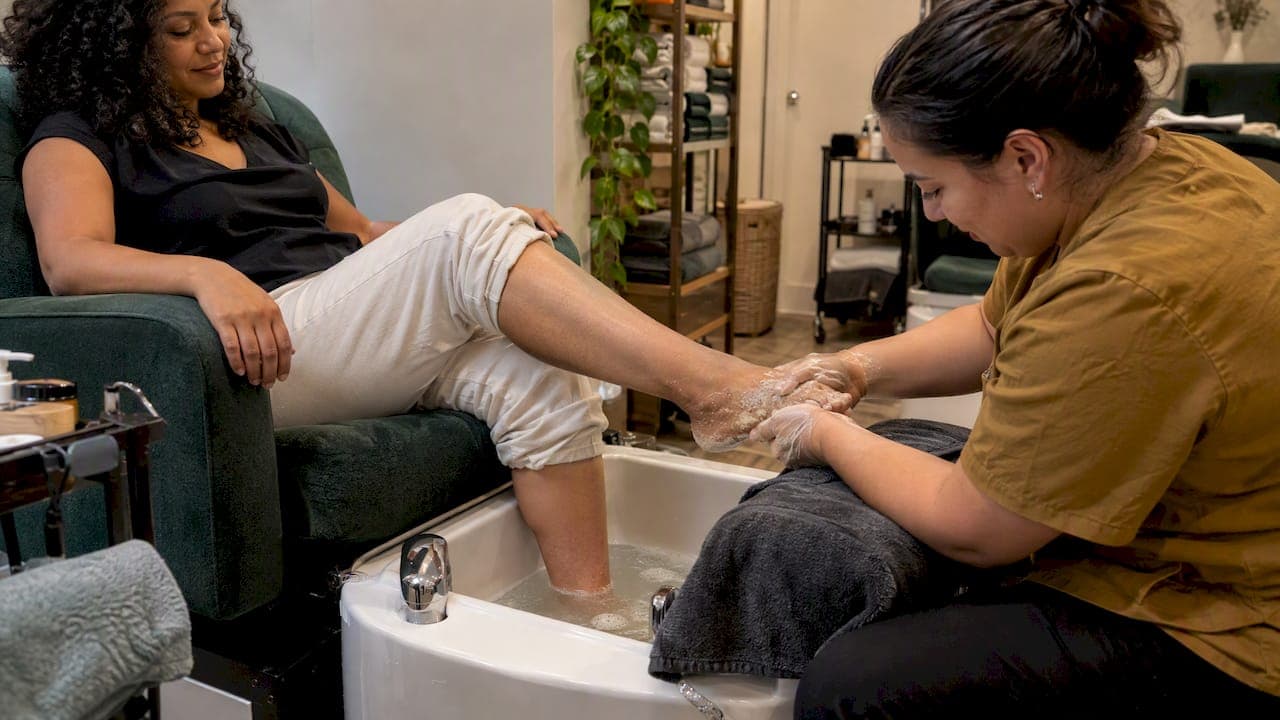
A regular pedicure is foot maintenance: a soak, nail trimming and shaping, light scrubbing and polish. A spa pedicure is the same service with more time and more care built in, usually a longer massage, a scrub, a mask or a hot towel wrap. Which one is right for you depends less on your feet than on what you want from the appointment: a quick tidy-up or an hour of being looked after.
This guide explains what separates the two, what you can expect to pay and how long to set aside, and which safety checks matter whichever you book.
TL;DR
- A regular pedicure covers the basics: soak, scrub, nail trim and file, and polish. A spa pedicure adds extras such as aromatherapy, a longer massage, masks or hot towels.
- Expect a spa pedicure to run roughly $10 to $15 above a standard pedicure’s base price, and to take noticeably longer.
- Menu names are not standardized. Ask what is actually included before you book.
- Hygiene matters more than the label: clean foot baths, sterilized tools and no foot razors.
- Do not shave your legs for at least 24 hours beforehand, and never let anyone cut your cuticles.
Table of Contents
- What a regular pedicure includes
- What makes a pedicure a “spa” pedicure
- Side by side
- What each one costs
- Other pedicure types you will see on a menu
- Which one should you book?
- Hygiene checks that matter more than the menu
- How to prepare before you go
- UV lamps and gel polish
- Our perspective at Head Case
- Making a pedicure part of a longer spa day
- Questions to ask before you book
- FAQ
- Sources
What a regular pedicure includes
The classic pedicure is the baseline service. According to a breakdown of pedicure types from Women.com, the spa version is a more luxurious take on the classic, which tells you what the classic is: the essentials, done well.
A typical regular pedicure runs in this order:
- A warm foot soak to soften skin and nails.
- Nail trimming and shaping.
- Gentle cuticle care (more on why “gentle” matters below).
- Light scrubbing or buffing of rough areas such as heels.
- Moisturizer, and often a short massage.
- Polish, or a buffed natural finish.
This is a good fit if you pedicure regularly, your feet are in good shape, and you mostly want clean, neat nails and fresh polish. It is also the better choice when you are short on time. Footfiles puts a regular pedicure at about 30 to 60 minutes.
What makes a pedicure a “spa” pedicure
A spa pedicure keeps every step of the regular service and adds comfort and skin care on top. Women.com, quoting nail professional Lisa Kon, lists aromatherapy, exfoliating scrubs, hydrating masks and foot massage as the usual additions. Other common upgrades are:
- A longer foot and lower-leg massage
- More detailed callus work
- Hot towels or a hot towel wrap
- Hot stones
- Richer lotions or butters
- Paraffin wax
The same Footfiles guide estimates 60 to 90 minutes for a spa pedicure. Treat that as a planning range, not a promise: the exact length depends on the salon and the extras you pick.
The important point is that “spa pedicure” has no fixed definition. One salon’s spa pedicure is a regular pedicure with a scrub added. Another’s includes a mask, a hot towel wrap and a 15-minute massage. Compare what is listed, not what the service is called.
Side by side
| Regular pedicure | Spa pedicure | |
|---|---|---|
| Core service | Soak, nail trim and file, cuticle care, polish | Everything in a regular pedicure, plus extras |
| Typical extras | Short lotion massage | Aromatherapy, scrub, mask, hot towels, longer massage, paraffin or hot stones |
| Time to plan for | About 30 to 60 minutes | About 60 to 90 minutes |
| Price | Base price | Often $10 to $15 more |
| Best for | Maintenance, tight schedules | Relaxation, dry or rough skin, special occasions |
| Focus | Tidy nails and polish | Skin comfort and the experience |
What each one costs
Prices vary by city, salon and polish type. Byrdie’s guide, built on advice from manicurists, says a standard pedicure starts around $25 and can reach $75, and that a spa pedicure may cost about $10 to $15 more than the standard base price. The difference pays for time and materials: a longer massage, an exfoliating scrub, hot stones or a hot towel wrap.
That also answers why pedicures can feel expensive. You are paying for a licensed technician’s time, one-on-one, plus sanitation of the tools and the basin between every client. A service that costs very little should make you ask what has been skipped.
A useful way to judge value: divide the price by the minutes and the extras you will actually use. If you never want the massage, a spa upgrade is money for something you will not notice. If your heels crack in summer or you spend your days on your feet, the extra scrub and moisture can be worth it.

Other pedicure types you will see on a menu
Most menus offer a few variations beyond “regular” and “spa”:
- Paraffin pedicure: a spa pedicure with a warm wax dip to soften dry skin.
- Sea salt or sugar scrub pedicure: a spa-style service built around a stronger exfoliation step.
- Deluxe or luxury pedicure: usually the longest menu option, combining several add-ons.
- Gel pedicure: a regular or spa pedicure finished with gel polish that is cured under a lamp and lasts longer than regular polish.
- Medical pedicure: a different category entirely. Cleveland Clinic describes medical pedicures as clinical, waterless treatments by certified medical nail technicians in podiatric settings, focused on foot health rather than looks.
If you have diabetes, poor circulation, thick fungal nails or painful ingrown nails, a medical setting or a podiatrist is the right first call, not a relaxation service.
Which one should you book?
Choose a regular pedicure when:
- You get pedicures every few weeks and your feet need only upkeep.
- You are on a lunch break or between errands.
- You mainly care about the polish and a clean nail shape.
Choose a spa pedicure when:
- You want the appointment to be a break, not a chore.
- Your skin is dry, rough or tired from long days or summer sandals.
- You are marking an occasion, such as a trip, a wedding or a birthday.
- You are pairing it with other services and have the time to settle in.
How often you book matters too. There is no universal schedule, PureWow reports: it depends on how quickly you build calluses and how much friction your daily activities create. As a general maintenance benchmark, the professional quoted there suggests about every two to three weeks. Many people alternate, with regular pedicures for upkeep and a spa pedicure when they want the full treatment.
Hygiene checks that matter more than the menu
The label on the service tells you little about safety. What happens to the tools and the basin tells you a lot. Whether you choose regular or spa, check these before you sit down.
Foot baths and basins
The American Academy of Dermatology says to look at the salon’s cleanliness, handwashing between clients and tool-cleaning practices, and warns that foot baths and filters that are not thoroughly disinfected can harbor bacteria and fungus. OSHA says salons must disinfect foot basins after each client and at the end of the day. It is fair to ask, politely, how the basin is cleaned between guests.

Tools
According to Cleveland Clinic podiatrist Dr. Joy Rowland, the best way to sterilize salon instruments is autoclaving, the standard method in hospitals. Ask whether metal tools are sterilized or whether your tools are new and single-use. The American Podiatric Medical Association (APMA) also suggests bringing your own utensils, since bacteria and fungus can spread when sterilization is poor.
No foot razors
The APMA advises not allowing technicians to use foot razors. A spa pedicure that promises “callus removal” should do it with a file or a gentle exfoliant instead.
Fish pedicures
Skip them. The CDC says fish cannot be disinfected or sanitized between customers, and tubs cannot be cleaned sufficiently while fish are in them.
Cuticles and exfoliation
The AAD says not to cut or forcefully push back cuticles, and the APMA notes that cuticles protect against bacteria. If a technician reaches for the nippers, say no thanks. Exfoliation should be gentle too. The AAD cautions that it should be avoided over open cuts or wounds and followed by moisturizer, because over-exfoliating can cause redness and irritation. That applies directly to a spa pedicure’s scrub step.
How to prepare before you go
A few small habits make any pedicure safer and last longer:
- Do not shave your legs first. The AAD advises waiting at least 24 hours, because razor nicks raise infection risk. The APMA gives the same advice about freshly shaved skin and small cuts.
- Check your feet. If you have a cut, open sore, or an infected-looking nail, reschedule and see a doctor or podiatrist.
- Tell your technician about sensitivities. Fragrance, essential oils and strong scrubs are the usual culprits in a spa service.
- Plan the timing. Book the longer spa service when you will not be rushing out the door, and leave your shoes open and comfortable afterward.
If your pedicure is part of getting ready for a wedding, it helps to see it inside the larger timeline. A physician-led pre-wedding skincare plan shows how far ahead to start caring for your skin, and your feet fit into that same schedule.
Between appointments, the APMA recommends trimming toenails straight across and making sure no moisture stays between your toes.
UV lamps and gel polish
If you add gel polish, you will likely place your hands or feet under a UV lamp. Dr. Melissa Piliang of Cleveland Clinic says the cancer risk from infrequent exposure is minor, though protective measures such as sunscreen are still recommended. If you get gel often, that is worth a conversation with your dermatologist.
Our perspective at Head Case
We think the best pedicure is the one where you know what you are getting, and where the products and the practices match the care you want for your body. That is how we approach everything at Head Case. Both of our studios use vegan, cruelty-free products in sustainably packaged form, and we run as a Certified Green Business, so we pay attention to what touches your skin and to what happens after the appointment is over.
In our Kansas City salon and spa, nails sit alongside facials, massage, waxing and head spa, and that is why many guests choose to stack services in one visit. If you are going to take the time for a spa pedicure, it makes sense to treat it as part of a self-care block, not a rushed errand. Our advice is simple: ask what is in the service, ask how tools and basins are cleaned, and choose the version you will actually enjoy. A regular pedicure done carefully beats a spa pedicure done carelessly every time.
— Kelley Swing
Making a pedicure part of a longer spa day
If you are in downtown Kansas City, our Kansas City studio offers manicures and pedicures alongside massage therapy, facials and spa skin treatments and our head spa treatments. Pairing services saves you a second trip and turns a pedicure into a proper reset. You can see everything we offer on our services page, and when you book, tell us which version of a pedicure you are after so we can set aside the right amount of time.
Questions to ask before you book
Whether you come to us or go elsewhere, these questions separate a good pedicure from an average one:
- What is included in the spa version, step by step?
- How long is the appointment, and how much of it is the massage?
- How do you clean the basin between guests?
- Are tools sterilized, or are they single-use?
- Do you use foot razors? (The answer should be no.)
- What does it cost with the upgrades I want, tip aside?
A salon that answers these clearly is a salon that takes the work seriously.
FAQ
Is a spa pedicure worth the extra money?
It is worth it if you will use the extras: a longer massage, a scrub for rough heels, a mask or hot towels. Expect to pay about $10 to $15 more than a standard base price. If you only want neat nails and polish, a regular pedicure does the job.
How long does a spa pedicure take?
Plan on roughly 60 to 90 minutes, compared with about 30 to 60 minutes for a regular pedicure. The range depends on the salon and the add-ons you choose. Ask when you book so you can leave enough time.
What should I do before a pedicure?
Do not shave your legs for at least 24 hours, since razor nicks can let bacteria in. Check your feet for cuts or sores, and ask how the salon cleans its foot baths and tools. You can also bring your own utensils, as the APMA suggests.
Why are pedicures so expensive?
You are paying for a licensed technician’s one-on-one time, the products used, and the cleaning and sterilization of tools and basins between guests. Standard pedicures start around $25 and can reach $75, and spa add-ons raise the total. Very low prices are worth a question about sanitation.
How often should I get a pedicure?
There is no single rule. A professional quoted by PureWow suggests about every two to three weeks as a general maintenance benchmark, but callus buildup and daily friction on your feet change that. Many people go less often and book a spa pedicure for occasions.
Sources
- Every Type Of Pedicure, Explained (Women.com)
- Spa Or Regular Pedicure - Which is Best? (Footfiles)
- A Guide to Every Type of Pedicure, According to Manicurists (Byrdie)
- What To Know About Medical Pedicures (Cleveland Clinic)
- How Often Should You Get a Pedicure? (PureWow)
- Manicure and pedicure safety (American Academy of Dermatology)
- Health Hazards in Nail Salons: Biological Hazards (OSHA)
- How You Can Avoid an Infection From a Salon Pedicure (Cleveland Clinic)
- Pedicure Pointers (APMA)
- Healthy Habits: Foot Hygiene (CDC)
- How to safely exfoliate at home (American Academy of Dermatology)
- Can Ultraviolet Nail Salon Lamps Give You Skin Cancer? (Cleveland Clinic)
- Physician Led Bridal Pre Wedding Skincare Plan