Massage Add-Ons: Options, Typical Prices and How to Choose

A massage add-on is an optional extra layered onto a standard session, such as hot stones, an aromatherapy blend, a scalp treatment or extra time, and it is usually charged separately. Most add-ons cost roughly $5 to $35 in the U.S., with extra minutes priced on their own scale. The right one depends on what you want from the hour: more relief in a sore area, deeper calm, or a little indulgence. This guide covers the common options, what they usually involve, what affects the price, and the questions to ask before you say yes.
TL;DR
- Add-ons are optional upgrades to a base massage. Typical U.S. ranges run from about $5 for aromatherapy to $35 for hot stones, with added time often $1 to $2 per minute.
- Pick the add-on that matches your goal for the session: tension, stress, tired feet, dry skin or simply more time on the table.
- Tell your therapist about your health history, medications, allergies and any recent surgery before adding anything, especially heat, cupping or topical products.
- Ask what the add-on includes, how long it takes, and whether it comes out of your massage time or extends it.
- At our Kansas City studio, massage sits alongside head spa, facials and nails, so you can build a longer self-care visit in one place.
Table of Contents
- What massage add-ons are, and how they differ from a standard massage
- The most common massage add-ons and what each involves
- What massage add-ons typically cost in the U.S.
- How to choose the right add-on for your session
- What the research says about enhancements
- Safety: what to tell your therapist before you add anything
- Questions to ask before you say yes
- Building a bigger self-care visit in downtown Kansas City
- Book your Kansas City spa day with Head Case
- FAQ
- Sources
What massage add-ons are, and how they differ from a standard massage
A standard massage is the core service: a set length of time, a technique such as Swedish or deep tissue, and a plan for where to focus. An add-on is anything extra that increases the therapeutic value or the sensory experience of that session. It is priced separately so you choose what you want rather than paying for a bundle you may not use.
You will also see the same idea called enhancements, upgrades or boosters. The names change from spa to spa, but the logic is the same: a base treatment plus a menu of choices.
There are two broad types:
- Add-ons that change what happens during your massage. Aromatherapy oil, a different topical, heated stones placed on the back, or a hot towel finish. These usually fit inside the time you already booked.
- Add-ons that add something new. Extra minutes, a scalp or foot treatment, assisted stretching, a mask or a scrub. These typically take extra time, and you pay for it.
That difference matters when you plan your day. Ask which kind you are looking at before you book, so the appointment does not run longer than you expected.
The most common massage add-ons and what each involves
Massage Magazine’s list of seven common add-on services is a useful map of what therapists offer. Here is how those and a few other popular choices work in practice.
Hot stones and heat
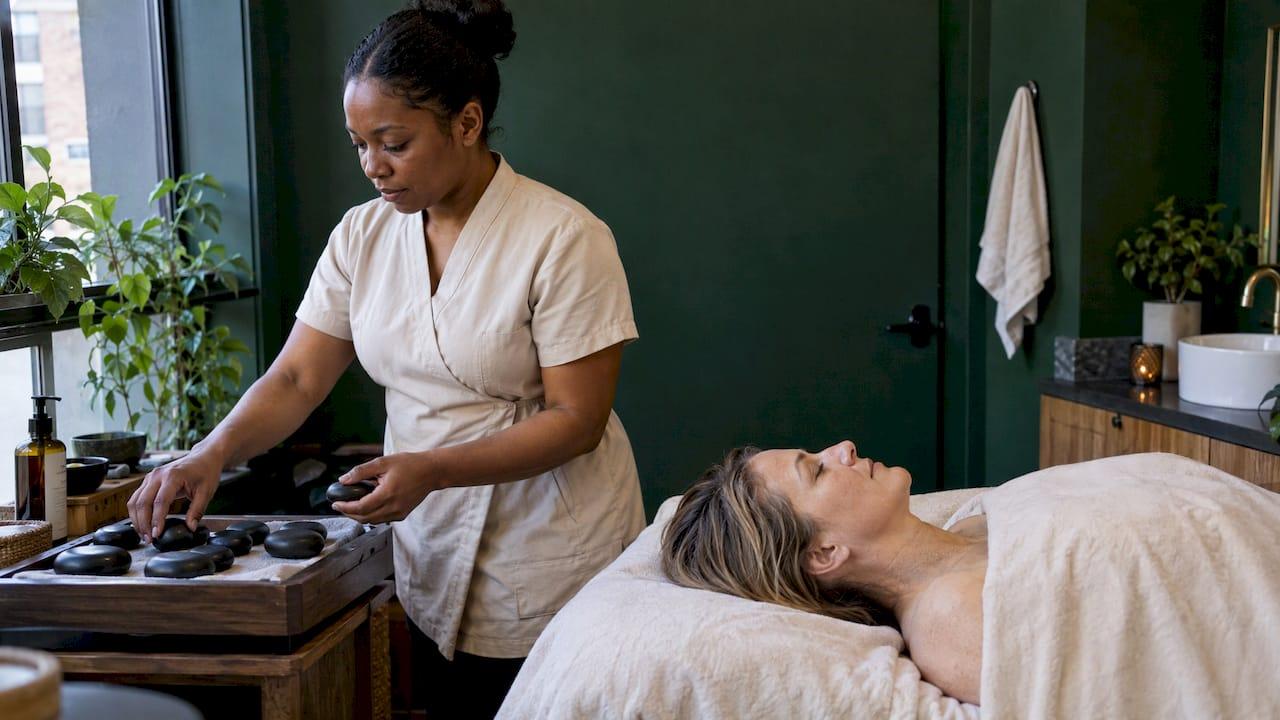
Smooth, warmed stones are placed on the body or held by the therapist while working. Heat helps muscles feel looser so the therapist can work with less pressure. Infrared heat is a related option that warms the area being treated. Hot stones are among the pricier add-ons because of the equipment and the care needed to keep temperature safe.
Aromatherapy and essential oils
Your therapist blends or diffuses an essential oil, often lavender for calm or peppermint or eucalyptus for a more awakening feel. It is usually the lowest-cost add-on and requires no extra time. If you are sensitive to fragrance or have allergies, say so first, because the oil is applied to your skin and breathed in for the whole hour.
CBD and arnica topicals
These are analgesic lotions or oils applied to areas of soreness. Guests with tight shoulders, a stiff lower back or tired legs often choose them. Ingredients differ from one product to another, so ask what is in it, particularly if you have skin allergies.
Scalp and head work
A scalp massage added to the end of a body massage melts away the tension that collects around the temples, jaw and neck. It is one of the quicker add-ons, often around ten minutes. For a fuller version of the same idea, see the head spa section below.
Foot treatments
A salt soak, an Epsom or sea salt foot bath, or extra attention to the feet. It suits anyone who spends the day standing or walking, which includes a lot of downtown workers and visitors.
Scrubs and masks
A body scrub or mud mask exfoliates and softens skin. These take longer, since they are a separate step before or after the massage itself.
Assisted stretching
The therapist guides your limbs through gentle stretches at the end of the session. It is a good pairing for desk-bound guests with tight hips and hamstrings.
Cupping
Suction cups are placed on the skin over tense areas. Cupping is treated differently from one state to the next, because what a massage license allows varies by state and sometimes by city. Ask whether your therapist is trained and licensed to do it, and expect temporary round marks on the skin.
Extra time
Sometimes the best add-on is simply more minutes. If you booked 60 minutes and wish you had a focused 15 more on your shoulders, extending is often the most useful choice.
What massage add-ons typically cost in the U.S.
Prices differ by city, spa type and therapist, so treat the figures below as typical ranges, not quotes. They come from a 2026 industry overview of add-on pricing.
| Add-on | Typical U.S. price |
|---|---|
| Aromatherapy or essential oil blend | $5 to $15 |
| CBD or arnica topical | $10 to $25 |
| Hot stones | $15 to $35 |
| Cupping | $15 to $30 |
| Scalp or foot treatment | $10 to $20 |
| Extended time | Often $1 to $2 per added minute |
Two things push these numbers up or down. The first is the setting: add-ons at a day spa tend to run lower than at a resort, where the same upgrade may cost $20 to $50 or come bundled into a premium package. The second is time. The real cost of an add-on is often not the oil or the stone but the minutes a therapist spends on it, which is why add-ons that need extra time cost more than a simple oil swap.
A small add-on can also be a fair alternative to a higher base rate. The AMTA has described therapists who added $10 to $15 add-ons to their menus so that clients could choose extras instead of facing an across-the-board increase.
At Head Case, we do not publish massage add-on prices on our site. Our team will tell you what is available and what it costs when you book.

How to choose the right add-on for your session
Start with the reason you are booking. The AMTA reports that 62% of people who get a massage do so for health and wellness reasons, with stress relief and muscle soreness the top drivers. Match the add-on to that goal:
- Sore, tight muscles: heat, a warming topical, or extra time focused on the problem area.
- Stress and trouble switching off: aromatherapy, a scalp treatment or a hot towel finish.
- Tired feet or legs: a foot soak or foot-focused work.
- Stiffness from sitting: assisted stretching or extra time.
- Dry or dull skin: a scrub or mask, or a facial on the same visit.
Then check three practical points:
- Time: Does it replace part of your massage or extend it?
- Price: Is it a flat fee or per minute?
- Fit: Do you have any scent sensitivity, skin condition or injury that changes what suits you?
If you are new to a spa, start with one add-on. A single change is easier to judge than three at once, and you can adjust next time.
What the research says about enhancements
Most add-ons are chosen for how they feel, and that is a perfectly good reason. For aromatherapy, a 2019 systematic review of 22 trials with 1,956 participants looked at massage and aromatherapy for anxiety, pain and quality of life. It found the evidence inconclusive and reported no evidence of harm. The practical takeaway: choose what you enjoy, and expect a more relaxing experience rather than a guaranteed medical result.
Safety: what to tell your therapist before you add anything
Massage is usually safe for most people when you work with a trained therapist, your health care provider has agreed to massage for any medical condition, and you share your health history. That history includes incisions or wounds, osteoporosis, tumors, infectious diseases, bleeding disorders, medications, allergies and implanted devices.
Add-ons make that conversation more important, because heat, suction and topical products each interact with the body differently. The Mayo Clinic lists conditions that call for special precautions or a provider’s clearance, including:
- blood-clotting disorders or blood-thinning medication
- deep vein thrombosis
- burns or open wounds
- cancer
- uncontrolled high blood pressure
- severe osteoporosis
- recent surgery
- high-risk pregnancy
If any of these applies to you, talk to your doctor and your massage therapist before booking heat, cupping or stretching add-ons. Tell the therapist at the start of the session, not halfway through, and speak up if anything feels too hot, too strong or irritating. A good therapist expects that. Some state rules even require therapists to ask about health history and obtain consent before treatment. North Carolina’s code, for example, requires a client assessment and written consent and says you can refuse, modify or end treatment at any point.
Questions to ask before you say yes
- What exactly does this add-on include?
- How many minutes does it add, or does it come out of my session?
- What is the price, and is it per session or per minute?
- Which products or oils do you use, and what is in them?
- Is there anything about my health history that makes this a poor fit?
Five questions take under a minute, and they let you spend your money on exactly what you want.
Building a bigger self-care visit in downtown Kansas City
Some guests do not want one add-on so much as a fuller visit. That is where our Kansas City studio is set up differently from a massage-only room. Alongside massage therapy, the downtown studio offers head spa treatments, facials and spa skin treatments, nails and full-body waxing, so you can combine services in one stop.
A few pairings that people ask about:
- Massage and head spa: body tension and scalp tension are often connected, and a head spa gives the scalp the same attention.
- Massage and facial: a calm hour on the table, then skin care for the face.
- Massage and a manicure or pedicure: a full reset for hands and feet.
Our services use vegan, cruelty-free products, and the studio is a Certified Green Business through Green America. If you care about what goes on your skin, tell your therapist and we will walk you through what we use.
Our perspective on add-ons
We think of an add-on as a way to personalize, not to upsell. The best ones start with a conversation: what is bothering you, what do you want to feel when you walk out, and how much time do you have?
That is the same way we approach hair. At Head Case we have always believed you should not have to choose between great results and clean, thoughtful products. We built both studios around ammonia-free, certified-organic colour from NATULIQUE and vegan, cruelty-free products, and the spa side in Kansas City follows the same standard of care.
Our team is educated, and we like to explain what we are doing and why. If you are curious about an add-on, ask us. We would rather you leave with the service that suits you than the longest menu.
Kelley Swing
Book your Kansas City spa day with Head Case
If you want a massage designed around you, our downtown Kansas City studio is the place to start. We offer massage therapy, head spa, facials, nails and waxing under one roof, and our team can help you work out which enhancements suit your session.

See our massage therapy page to book, or browse all of our services if you want to plan a longer visit.
On the hair side, we apply the same philosophy to chemical services. If you are thinking about a perm, we consider NATULIQUE the safer alternative, and you can read more about smoothing treatments and perms before you book.
FAQ
Are massage add-ons worth it?
They are worth it when they match what you came for. If you want more relief in a specific area, extra time or a heat or topical add-on can help. If you simply want to relax, a small, low-cost add-on such as aromatherapy can make the hour feel more personal. Start with one and see how it feels.
How much should I budget for a massage add-on?
Plan on roughly $5 to $35 for most add-ons in the U.S., depending on the type, with extra time often priced at $1 to $2 per minute, according to typical industry ranges. Prices vary by city and spa. Ask for the exact price when you book so there are no surprises.
Can I add something to my massage on the day?
Often yes, but it depends on the schedule and the add-on. Some, like aromatherapy, are easy to add on the spot. Others, like extra time or a treatment such as a scrub, need space in the therapist’s calendar. If you know you want one, mention it when you book.
Are add-ons safe if I have a health condition?
That depends on the condition and the add-on. Medical conditions such as blood-clotting disorders, blood thinners, recent surgery or uncontrolled high blood pressure call for a conversation with your health care provider and your therapist first. Share your health history, medications and allergies before the session starts.
Sources
- Massage Therapy Add-On Services (DoorstepHQ)
- 7 Massage Add-On Services to Help Clients & Increase Income (Massage Magazine)
- Average Spa Treatment Prices in the US (SpasRated)
- 4 Tips to Help Massage Therapists Deal With Inflation (AMTA)
- 12 Massage Add-Ons That Boost Revenue Without Extra Time (Reservio)
- The effectiveness of aromatherapy, massage and reflexology (PMC)
- Medical-Based Massage Therapy (Mayo Clinic)
- 21 N.C. Admin. Code 30 .0503 (Cornell Law Institute)